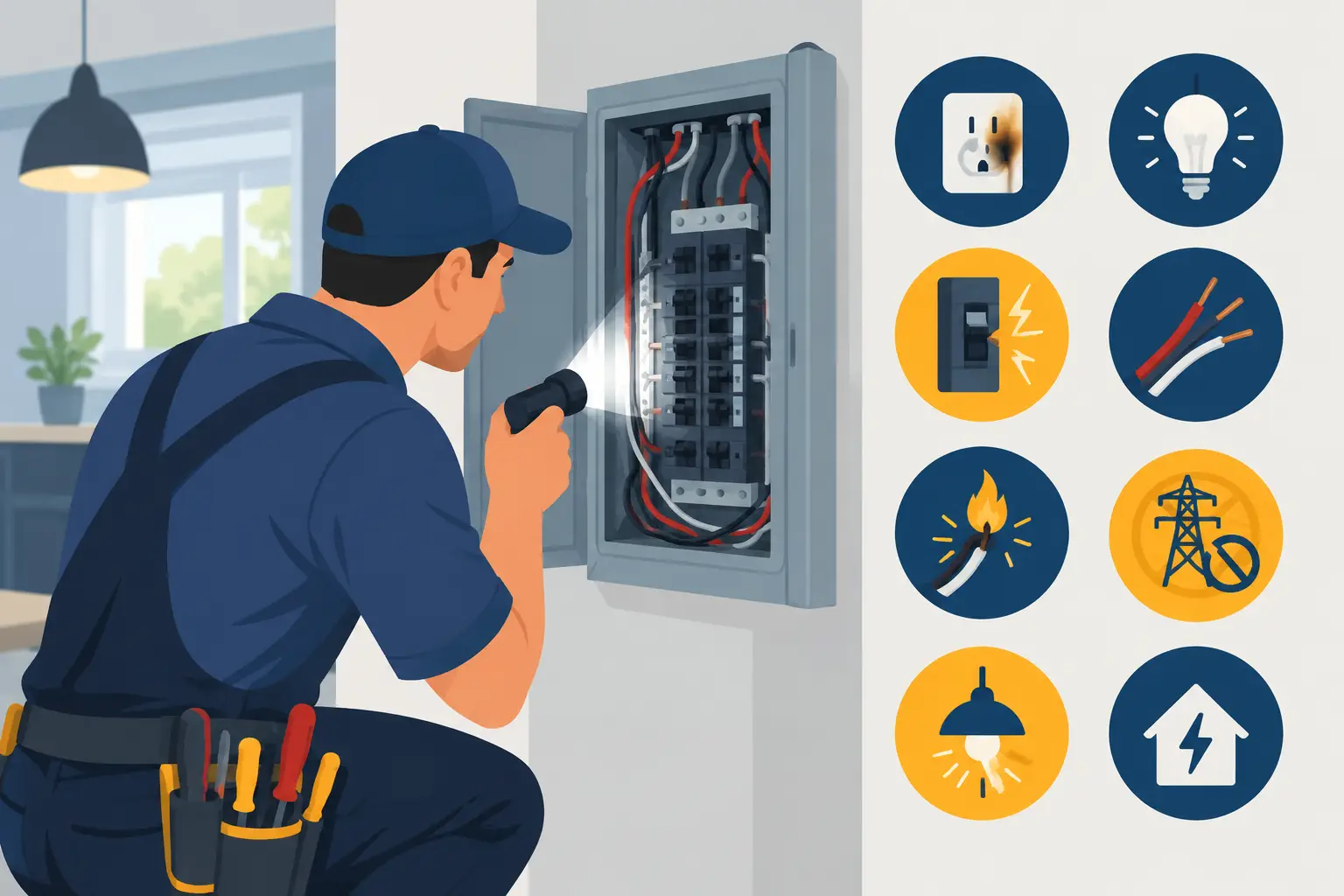
A breaker that trips once after a heavy appliance starts may be frustrating. A panel that feels hot, smells like burning plastic, or throws sparks is a different situation entirely. Knowing when an emergency electrician is needed helps you protect people, property, and the electrical system before a small fault becomes a fire, shock hazard, or costly outage.
For homeowners, property managers, and business owners, the safest decision is not always to wait and see. Electrical problems can stay hidden behind walls and panels, so visible warning signs deserve prompt attention from a licensed electrician. The goal is simple: make the area safe, identify the cause correctly, and complete a code-compliant repair.
When Is an Emergency Electrician Needed?
An emergency electrician is needed when an electrical problem creates an immediate risk of fire, electric shock, damage to equipment, or loss of power to essential systems. This can happen at any hour, especially after storms, equipment failures, water leaks, or an overloaded circuit.
Not every electrical inconvenience requires a middle-of-the-night service call. A single dead outlet that is not warm, damaged, or serving critical equipment can often be scheduled during normal hours. But if the issue involves burning smells, heat, smoke, exposed wiring, water, repeated breaker trips, or a total loss of power inside the building, it should be treated as urgent.
A licensed electrician can troubleshoot the source rather than simply reset a breaker or replace a burned component. That distinction matters. The visible symptom may be one outlet, while the actual issue could be a damaged wire, failing connection, overloaded circuit, or aging electrical panel.
8 Electrical Warning Signs That Cannot Wait
1. Burning smells, smoke, or scorch marks
A burning odor near an outlet, switch, electrical panel, appliance cord, or light fixture should never be ignored. Scorch marks, discoloration, buzzing, and smoke can point to overheating connections or arcing inside the wiring.
If it is safe to do so, turn off power at the breaker for the affected area. Do not touch a hot outlet, remove a cover plate, or use water to address an electrical fire. Move people away from the area and call for emergency help if there is active fire or smoke. Once the immediate danger is controlled, an emergency electrician should inspect the system before power is restored.
2. Sparks from an outlet, panel, or equipment
A tiny spark can occasionally occur when plugging in a device, but frequent, large, or persistent sparking is not normal. Sparks from an outlet, switch, breaker panel, or electrical equipment may indicate loose wiring, a failing device, moisture intrusion, or a short circuit.
Do not keep testing the outlet to see whether it happens again. Unplug equipment only if it can be done safely, shut off the circuit, and keep the area clear until it can be inspected.
3. A breaker trips repeatedly
Circuit breakers are safety devices. They shut off power when a circuit is overloaded or when a fault is detected. Resetting a tripped breaker once may be reasonable if you know the cause was temporary, such as too many high-demand appliances on one circuit.
Repeated tripping is a warning that should not be worked around. If the breaker trips again immediately, will not reset, or trips when little is running, leave it off. The problem may involve damaged wiring, a failing appliance, a ground fault, or an issue inside the panel. For a business, repeated trips that affect refrigeration, security systems, point-of-sale equipment, or critical operations may require emergency service right away.
4. The electrical panel is hot, noisy, or damaged
Your electrical panel should not feel hot to the touch, make crackling sounds, or show signs of corrosion, water damage, melted plastic, or burned breakers. These symptoms can signal dangerous overheating or poor electrical connections.
Do not remove the panel cover or attempt to replace breakers yourself. Panel work exposes live components and requires professional diagnosis. An emergency electrician can determine whether the issue is limited to a breaker or whether the panel, service connection, or wiring needs repair or an upgrade.
5. Water has reached electrical wiring or equipment
Water and electricity are a serious combination. A roof leak near a light fixture, flooding in a garage, a burst pipe near outlets, or water inside an electrical panel needs prompt attention. In coastal Georgia, storm-related leaks and flooding can create electrical hazards even after the rain has stopped.
Stay out of standing water if electrical equipment may be energized. Do not touch wet cords, outlets, appliances, or panel components. If power can be shut off safely from a dry location, do so. A licensed electrician should inspect affected wiring and equipment before it is used again.
6. You have partial power or a sudden whole-building outage
If neighbors also have no power, the issue may be on the utility side. Report it to the utility provider and follow outage guidance. If your property alone loses power, has flickering lights in multiple rooms, or has some circuits working while others fail, the problem may be within your electrical system.
Partial power can be especially concerning because it may result from a loose service connection, damaged main breaker, panel failure, or utility-related issue that needs coordination. Avoid running sensitive electronics or large appliances until the cause is known. A prompt inspection can help prevent damage to equipment and reduce the chance of a more serious failure.
7. Someone received an electric shock
Even a mild shock from an appliance, switch, outlet, or metal fixture deserves attention. It can indicate improper grounding, damaged wiring, moisture, or a faulty appliance. If the shock was strong, caused a burn, involved a child, or occurred near water, seek medical care as appropriate and shut off the affected circuit if it is safe.
Do not assume the problem is solved because the person feels fine afterward. The electrical source still needs professional evaluation before anyone uses it again.
8. Exposed, damaged, or downed electrical wiring
Frayed cords, chewed wiring, loose outlets, damaged service cables, and exposed conductors are all hazards. Downed outdoor power lines are especially dangerous. Keep everyone well away, including pets, and contact emergency services or the utility company. Never attempt to move a line, even with a nonmetal object.
For damaged wiring inside a home, office, rental property, or shop, turn off the circuit if possible without touching damaged components. Emergency electrical repair is appropriate when the exposed wiring could be energized or when the damage affects essential power.
What to Do Before Help Arrives
Your first job is safety, not diagnosis. If there is fire, smoke, a downed line, or an immediate threat to life, call 911 first. For other urgent electrical issues, take sensible steps without putting yourself in harm’s way:
- Keep people away from the affected outlet, panel, appliance, or water-damaged area.
- Shut off the affected breaker only if the panel is dry, accessible, and safe to reach.
- Unplug devices only when there is no heat, smoke, water, or visible damage.
- Avoid using extension cords or bypassing a tripped breaker to restore power.
- Make a note of what happened, such as recent storm damage, appliance use, flickering lights, or breaker behavior.
That information helps the electrician narrow down the issue faster. It may also prevent accidental reuse of a circuit or appliance that should remain off.
Why a Licensed Electrician Matters in an Emergency
Emergency electrical work is not the time for guesswork or a quick patch from an unqualified contractor. A repair that restores power without addressing the underlying fault can leave a dangerous condition behind. Licensed electricians use the right testing methods to locate faults, evaluate load demands, verify grounding, and make repairs that meet applicable code requirements.
This is particularly important in older homes, rental properties, and commercial spaces where electrical systems may have been modified over time. An overloaded panel, outdated wiring, or improperly added circuit can create problems that are not obvious from the room where the symptom appeared.
A professional can also explain the practical next step. Sometimes the answer is a targeted repair. Other times, a panel upgrade, dedicated circuit, surge protection, or planned maintenance is the more reliable long-term solution. The right recommendation depends on the condition of the system, the building’s electrical demand, and the cause of the emergency.
When something feels wrong electrically, trust the warning sign. Turning off the affected circuit, keeping the area clear, and calling a licensed emergency electrician can protect your Savannah-area property and give you a safe path back to normal power.
Leave a Reply