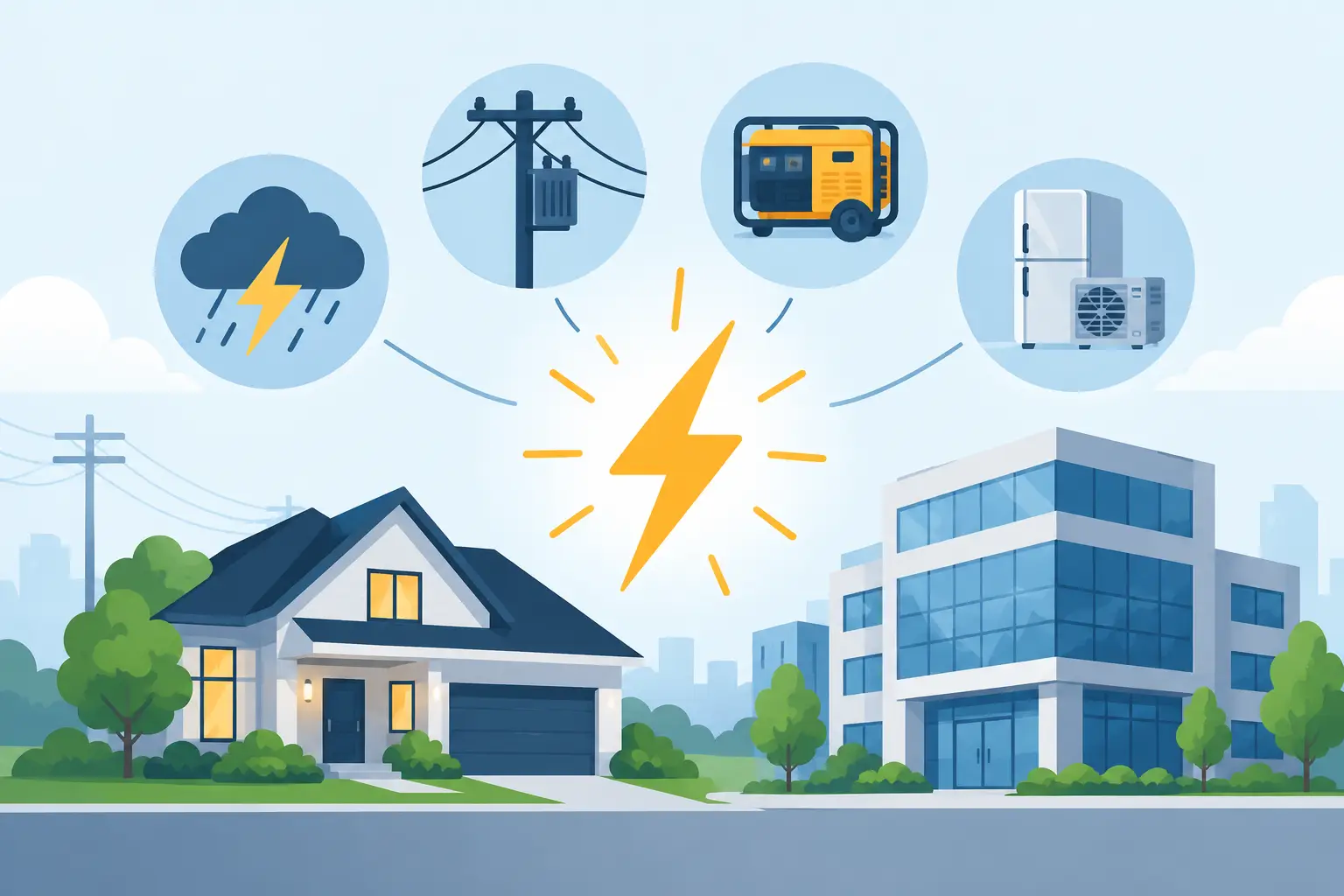
A refrigerator clicks on, the lights blink for half a second, and everything appears normal again. That brief event can still place stress on electronics, appliances, and electrical components. Understanding the top causes of power surges helps homeowners and business owners recognize when a one-time nuisance may point to an electrical issue that needs professional attention.
A power surge is a sudden rise in voltage above the normal level supplied to your building. Most surges are short and may not cause an immediate failure. The concern is cumulative damage. Repeated small surges can wear down circuit boards, shorten appliance life, and leave a television, HVAC control board, computer, or point-of-sale system more vulnerable to eventual failure.
What Causes a Power Surge?
Not every surge comes from a dramatic lightning strike or utility outage. In fact, many happen inside the home or business itself. The source matters because the right solution depends on whether the problem is isolated to one appliance, one circuit, the electrical panel, or the utility supply.
Lightning and severe weather
Lightning is the most familiar cause because it can create a powerful voltage spike through utility lines, phone or cable lines, or the building’s electrical system. Savannah-area storms can bring frequent lightning, high winds, and utility disruptions, especially during warmer months.
A quality whole-home surge protective device can reduce the impact of voltage surges entering through the electrical service. It is not a guarantee against a direct lightning strike. If lightning strikes a building or a nearby line directly, the energy can exceed the capacity of ordinary protective equipment. Proper grounding, bonding, and a licensed electrician’s inspection are essential parts of reducing risk.
Utility grid switching and power restoration
Surges can occur when the electric utility switches power sources, restores service after an outage, or responds to a damaged line. When power returns, voltage may fluctuate briefly as the grid stabilizes and connected equipment comes back online.
This is one reason electronics sometimes fail after an outage even though they were working before it happened. A whole-home surge protector provides a first layer of defense, while point-of-use surge protectors can offer added protection for sensitive devices such as computers, routers, televisions, and office equipment.
Large appliances cycling on and off
Air conditioners, refrigerators, freezers, washers, dryers, well pumps, and other motor-driven equipment require extra power when starting. That startup demand can create a small internal surge or voltage disturbance. On its own, this is often part of normal operation. But frequent light flickering or electronics restarting whenever a major appliance starts may signal an undersized circuit, loose connection, weak neutral, or other wiring concern.
Commercial spaces can see the same issue with refrigeration equipment, compressors, exhaust fans, elevators, and larger HVAC systems. If a specific piece of equipment causes recurring electrical symptoms, troubleshooting the circuit and the equipment together is usually more useful than simply replacing another surge strip.
Faulty or aging wiring
Loose connections, worn insulation, damaged conductors, corroded terminals, and improperly completed repairs can all create unstable electrical conditions. Older homes and buildings may have wiring that no longer matches current electrical demands. Even newer properties can develop problems from moisture, pests, accidental damage during renovations, or poor-quality work.
Electrical issues are not always visible. A warm outlet, buzzing panel, burning odor, repeated breaker trips, or lights that dim and brighten without an obvious reason should be taken seriously. Do not keep resetting breakers or rely on a power strip to solve these symptoms. A licensed electrician can identify whether the issue is on a branch circuit, at the panel, or within the service equipment.
An overloaded electrical panel or circuit
Panels and circuits have limits. When a building has more equipment, appliances, or technology than its electrical system was designed to support, overload conditions become more likely. This is common in older homes with modern kitchen appliances, home offices, EV chargers, or added HVAC equipment. It can also affect businesses that have expanded workstations, refrigeration, machinery, or tenant improvements without upgrading electrical capacity.
An overload does not always create a traditional surge, but it can contribute to voltage drops, heat, nuisance tripping, and unstable power. The safest answer may be a dedicated circuit, panel upgrade, service upgrade, or a properly planned distribution of electrical loads. It depends on the building’s existing capacity and the equipment being added.
Downed lines, damaged transformers, and neighborhood faults
High winds, vehicle accidents, fallen branches, and equipment failures can damage utility infrastructure. A transformer problem or fault on a nearby line may cause flickering, outages, or unusual voltage behavior across more than one property.
If neighbors are experiencing the same problem, report it to the utility provider first. If the problem remains after utility service is restored, or it seems limited to your building, schedule an electrical inspection. Never approach a downed line, even if it appears inactive.
Improper grounding and bonding
Grounding and bonding are often misunderstood, but both are central to electrical safety and surge protection. Grounding provides a path for excess electrical energy to move safely toward earth. Bonding connects metal parts of the electrical system so they stay at the same electrical potential and reduce shock hazards.
A building with inadequate or outdated grounding may not manage surge energy effectively. This can be especially relevant after a panel replacement, renovation, addition, or equipment upgrade. A licensed electrician can inspect the grounding electrode system, panel connections, and bonding of metal systems to make sure the installation meets applicable code requirements.
Warning Signs That Point to a Surge Problem
One flicker during a thunderstorm is not automatically an emergency. Repeated or worsening symptoms deserve attention, particularly when they involve heat, odor, or power loss. Watch for lights that frequently flicker or change brightness, electronics that reset without explanation, outlets that feel warm, breakers that trip often, buzzing from the panel, or appliances that fail sooner than expected.
For business owners, unexplained point-of-sale restarts, network equipment failures, refrigeration alarms, and repeated HVAC control issues can create operational problems long before a major electrical failure occurs. Keeping a simple record of when symptoms happen and what equipment was running can help an electrician diagnose the cause more efficiently.
How to Protect Your Property From Power Surges
Effective protection is layered. A plug-in surge protector can help protect equipment connected to it, but it cannot correct faulty wiring, an overloaded panel, or poor grounding. It also may not protect hardwired equipment such as an air conditioner, water heater, garage door opener, or built-in lighting controls.
Start with a whole-home surge protective device installed at or near the electrical panel. This equipment is designed to divert excess voltage before it reaches many circuits in the property. For valuable or sensitive electronics, use listed point-of-use surge protectors as a second layer. Replace them after a major surge event or when their protection indicator shows they are no longer active.
Avoid overloading outlets with extension cords and multi-plug adapters. Use dedicated circuits where high-demand appliances or equipment require them. If your panel is outdated, crowded, damaged, or frequently tripping, an inspection can determine whether repair or an upgrade is the more cost-effective choice.
During a serious storm, unplugging sensitive electronics can provide additional protection when it is safe and practical to do so. Do not handle electrical equipment if there is water intrusion, active arcing, or a burning smell. Turn off power at the main breaker only if you can do it safely, then contact an emergency electrician.
When to Call a Licensed Electrician
A surge protector is a useful safety measure, not a diagnosis. Call a licensed electrician if surges are frequent, lights are flickering throughout the property, breakers keep tripping, or appliances and electronics are failing unexpectedly. Prompt troubleshooting can prevent damage to expensive equipment and, more importantly, identify conditions that may create a fire or shock hazard.
For homeowners and commercial properties in Savannah, a professional inspection can assess the panel, circuits, grounding, connections, and overall capacity of the electrical system. The goal is not to sell unnecessary work. It is to find the source of the problem and complete the right repair safely, reliably, and in compliance with current electrical standards.
Power problems rarely improve by being ignored. Addressing unusual electrical symptoms early gives you a better chance to protect your equipment, avoid a disruptive failure, and keep the people who rely on your property safe.
Leave a Reply