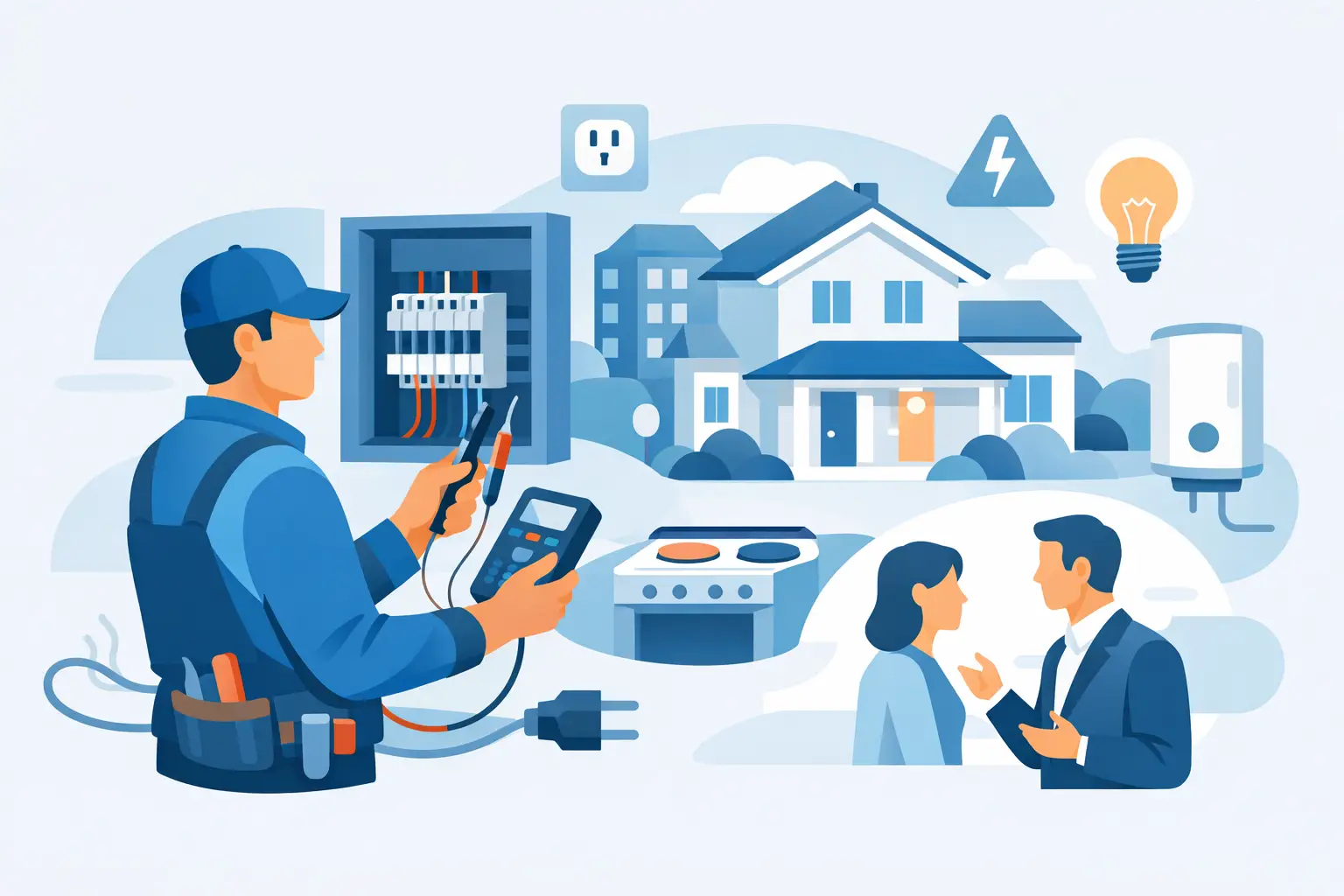
A tenant reports that half the kitchen outlets stopped working. Another says the hallway light flickers whenever the HVAC starts. These may seem like small maintenance calls, but they can point to overloaded circuits, loose connections, or aging equipment. Electrical maintenance for landlords is how you catch those issues before they become a safety concern, a costly emergency repair, or a reason for a tenant to lose confidence in the property.
For rental owners and property managers, the goal is not to replace working equipment without reason. It is to keep the electrical system safe, code-compliant, and dependable while planning repairs before they disrupt a lease or damage your budget.
Why electrical maintenance for landlords pays off
Electrical problems rarely arrive at a convenient time. A failed breaker, water-damaged outlet, or overheated panel can leave a unit without essential power and require a fast response. Preventive service gives you more control over timing, scope, and cost.
Routine maintenance also protects the people living or working in the building. Tenants may notice warm outlets, tripping breakers, buzzing switches, or lights that dim when appliances turn on, but they may not understand the risk or report it immediately. A regular inspection creates an opportunity to identify warning signs that have been overlooked.
There is also a business reason to stay ahead of repairs. Well-maintained rentals are easier to turn over, easier to market, and less likely to generate last-minute repair disputes. Documentation from licensed electrical work can be useful when planning improvements, responding to an insurance question, or showing that a property has been responsibly maintained.
Start with an electrical inspection
An electrical inspection is the foundation of a sensible maintenance plan, especially if you recently purchased a rental, inherited an older building, or have not had the system professionally reviewed in several years. Savannah-area properties can include older homes with outdated wiring alongside newer units with growing power demands from appliances, EV chargers, home offices, and modern HVAC equipment.
A licensed electrician can evaluate the service panel, breakers, wiring conditions that are visible and accessible, grounding, outlets, switches, exterior equipment, and common safety devices. The purpose is not to create a list of unnecessary upgrades. It is to determine what needs prompt attention, what should be monitored, and what may be worth budgeting for in the future.
What an inspection may uncover
Some concerns are obvious, such as a damaged panel cover or a loose outlet. Others need professional testing and a trained eye. Common findings include:
- Breakers that trip repeatedly or no longer operate reliably
- Missing or failed GFCI protection near kitchens, bathrooms, laundry areas, garages, and exterior outlets
- Loose outlets, worn switches, damaged cords, or exposed wiring
- Corrosion or moisture intrusion at outdoor panels, meters, fixtures, and receptacles
- Overloaded circuits caused by added appliances or tenant use
- Older panels, unsafe wiring methods, or insufficient service capacity for the property
Not every item requires a full-system overhaul. A few targeted repairs may be enough for a newer unit in good condition. An older rental with frequent breaker issues may need a panel upgrade or circuit additions instead. The right answer depends on the age of the system, the condition of the equipment, and how the unit is being used.
Build maintenance around tenant turnover and seasonal use
Vacancy periods are one of the best times to schedule electrical work. With the unit empty, an electrician can access outlets, lighting, the panel, attic areas, and exterior equipment without disrupting a resident’s routine. It is also easier to complete repairs before new tenants move in and before furniture hides problem areas.
During turnover, test every light switch, outlet, exhaust fan, smoke alarm, carbon monoxide alarm where required, and GFCI outlet. Check that exterior lights work, including porch lights, stairway lighting, and fixtures around parking or walkways. Good lighting is a safety issue as well as a basic tenant expectation.
Seasonal checks matter too. In coastal Georgia, humidity, heavy rain, storms, and salt exposure near the water can accelerate corrosion and moisture-related damage. Outdoor outlets, weatherproof covers, disconnects, and exterior lighting deserve extra attention. If a storm causes an outage, burning odor, fallen service equipment, or visible damage, treat it as an electrical service call rather than a wait-and-see issue.
Keep the panel clear, labeled, and properly sized
The electrical panel is the control center of the rental. It should remain accessible, dry, securely closed, and clearly labeled. Tenants should be able to identify basic breakers for their unit, but they should not be asked to repeatedly reset a breaker that trips under normal use. Frequent tripping is a signal to investigate, not a maintenance solution.
Accurate panel labels save time during emergencies and repairs. Each breaker should identify the rooms, appliances, or equipment it serves. Vague labels such as “lights” or “miscellaneous” make troubleshooting slower and can lead to unnecessary disruption when a repair is needed.
Capacity is another issue to watch. Older rentals were not designed for the number of devices, appliances, and high-demand equipment used today. If tenants rely on extension cords, power strips in every room, portable heaters, window AC units, or garage tools, the property may need additional circuits. Adding properly installed circuits is safer than expecting an aging system to carry loads it was never designed to support.
Respond quickly to tenant warning signs
A clear reporting process helps prevent small issues from becoming dangerous ones. Encourage tenants to report electrical concerns promptly and tell them not to remove panel covers, replace breakers, or attempt wiring repairs themselves.
Treat these reports as priorities: outlets or switches that feel warm, burning smells, sparks, buzzing, shocks or tingling, flickering lights throughout the unit, breakers that trip repeatedly, and power loss limited to part of the home. Water near electrical equipment also requires prompt professional attention.
Some calls are straightforward, such as replacing a damaged switch or correcting a failed GFCI outlet. Others can require troubleshooting to find a loose connection, damaged circuit, overloaded line, or issue with the main service. A qualified electrician should diagnose the cause before repairs are approved, so the same problem does not return a few weeks later.
Know when upgrades make financial sense
Maintenance and upgrades are related, but they are not the same. Maintenance keeps serviceable equipment working safely. An upgrade improves capacity, reliability, or compliance when the current system is no longer a good fit for the property.
A panel upgrade may be worth considering if the panel is outdated, breakers trip often, there is no room for new circuits, or you plan to add high-demand equipment. Remodeling projects are also a practical time to update wiring, install more outlets, improve kitchen and bathroom protection, or add dedicated circuits for appliances.
For multi-unit owners, a planned upgrade can be less expensive and less disruptive than making separate emergency repairs over several years. Still, replacement should be based on the condition of the equipment and the property’s future needs, not simply on age. A licensed electrician can explain the repair-versus-upgrade trade-off in plain language and provide a clear scope of work.
Document the work and use licensed professionals
Keep a record of inspections, repair dates, tenant reports, estimates, invoices, and any panel changes. Good records help you spot repeat issues in a specific unit and make it easier to plan capital improvements. They also give the next electrician useful background when troubleshooting.
Electrical work is not the place to choose the lowest bid without checking qualifications. Unlicensed or poorly performed repairs can create fire risks, code issues, failed inspections, and higher costs later. Licensed electricians bring the training, testing equipment, and code knowledge needed to make repairs correctly.
For landlords in Savannah, a dependable electrical partner can handle routine inspections, tenant repair calls, panel concerns, remodeling work, and urgent electrical problems when they arise. Schedule maintenance before the next turnover, and you will have a safer property, clearer repair priorities, and fewer surprises when a tenant flips the switch.
Leave a Reply