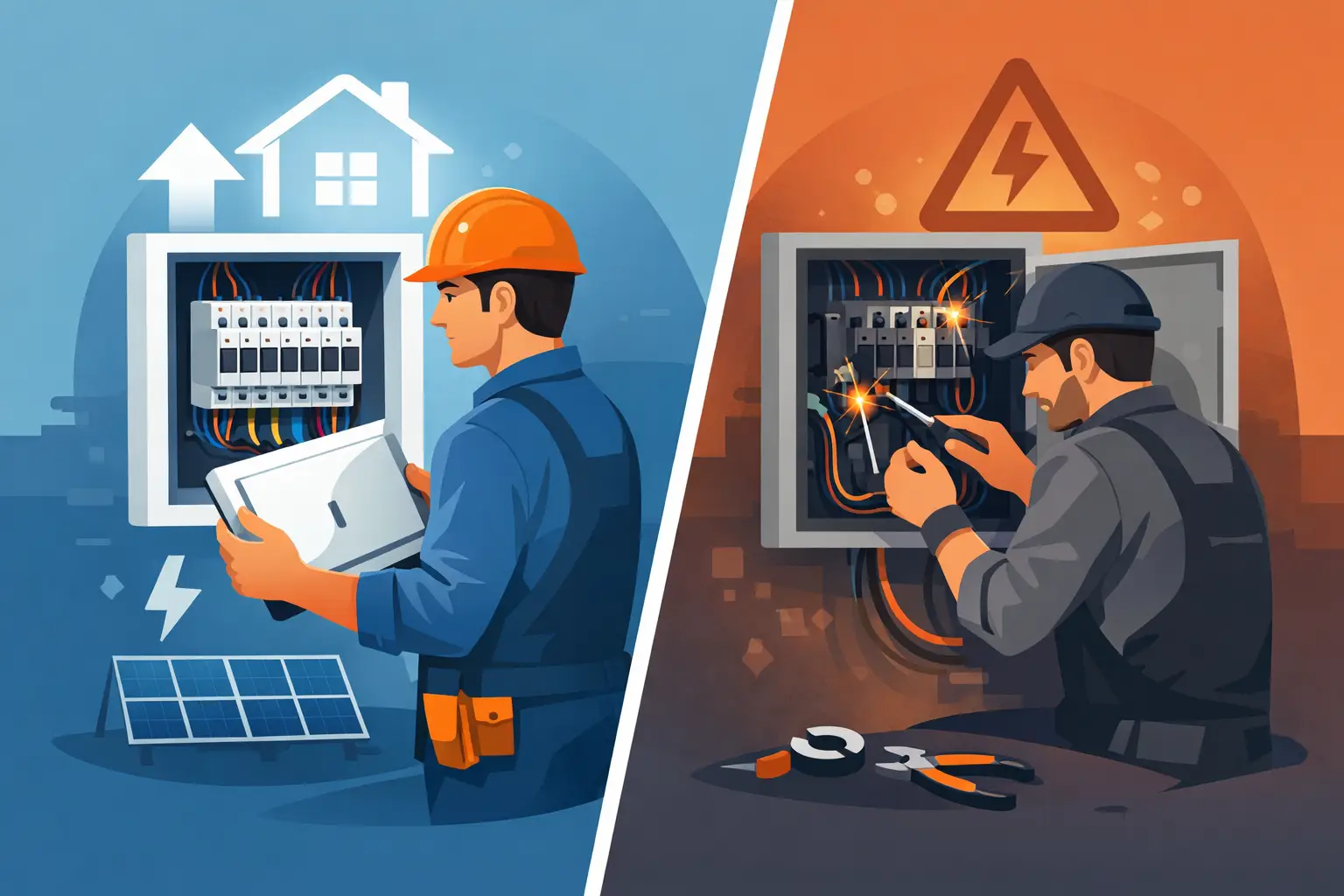
A breaker that trips once after a storm may need a straightforward repair. A panel that trips repeatedly, feels warm, crackles, or cannot support normal household equipment is a different situation. The decision between panel upgrade versus repair comes down to more than the lowest immediate price. It comes down to whether the electrical system can operate safely and reliably for the way you use the property now.
For homeowners, property managers, and business owners in Savannah, the right answer is often found through a licensed electrical inspection. A qualified electrician can identify the source of the problem, explain the condition of the equipment, and recommend a repair when it makes sense instead of pushing an unnecessary replacement.
When Electrical Panel Repair Makes Sense
Electrical panel repair is often the practical choice when the panel itself is in sound condition and the problem is isolated. For example, a failing breaker, a loose connection, damaged wiring to one circuit, or a mislabeled circuit can usually be corrected without replacing the entire panel.
A repair may be appropriate when the panel has enough capacity for the property, shows no signs of corrosion or overheating, and contains compatible, properly functioning breakers. If a single circuit is overloaded because too many appliances are plugged into one area, the solution might be adding a dedicated circuit rather than installing a new panel.
Common repair situations include a breaker that will not reset, flickering lights caused by a loose connection, a damaged bus connection, or a circuit that needs troubleshooting after an outlet stops working. These issues still need professional attention. Electrical panels contain energized components, and attempting a DIY fix can lead to shock, fire risk, or further damage.
Repair can also be the sensible route for a newer panel that was installed correctly but needs maintenance. Like any working system, electrical equipment can develop wear over time. Tightening approved connections, replacing a defective breaker with the correct model, and correcting an identified wiring issue can restore safe operation without the cost and disruption of a full service upgrade.
When a Panel Upgrade Is the Better Investment
A panel upgrade becomes more likely when the existing equipment is outdated, unsafe, undersized, or no longer suitable for the property’s electrical demand. Modern homes and commercial spaces use more power than they did decades ago. Central air conditioning, heat pumps, electric vehicle chargers, workshop equipment, kitchen appliances, computers, and smart devices all add to the load.
If the panel is full and there is no room for required new circuits, installing more equipment into an already crowded panel is not a good long-term answer. An upgrade provides room for future needs while allowing the electrical system to be organized and brought closer to current code requirements.
Certain warning signs call for prompt professional evaluation:
- Breakers trip frequently without an obvious temporary cause.
- The panel cover, breakers, or wiring feel warm or show discoloration.
- You hear buzzing, popping, or crackling from the panel.
- Lights dim when larger appliances start.
- The panel has rust, water damage, burning odors, or visible corrosion.
- The property still relies on fuses or an obsolete panel design.
- A renovation, addition, EV charger, or major appliance installation requires more capacity.
A panel upgrade may also include a service upgrade. The panel is the distribution point for circuits inside the building, while electrical service refers to the capacity supplied from the utility connection. A licensed electrician can calculate the actual load and determine whether you need a new panel only, a larger electrical service, or a targeted repair.
Older Panels Deserve Extra Attention
Age alone does not always mean a panel must be replaced. However, older equipment deserves a careful inspection, especially when it has not been evaluated in years. Some panel brands and designs have known safety concerns, while others may simply be worn, crowded, or incompatible with replacement parts.
Do not assume an old panel is safe because it has continued to work. Breakers are designed to protect wiring by tripping under fault or overload conditions. If breakers fail to trip properly, the risk is not always visible until there is overheating or damage. This is one reason an electrician should inspect any panel with a history of recurring trips, heat, unusual odors, or unreliable power.
Panel Upgrade Versus Repair: Cost Is Only One Factor
It is reasonable to consider cost first. Repairing a single breaker or circuit usually costs far less than upgrading a panel or electrical service. But the least expensive repair is not a value if it only postpones a serious capacity or safety problem.
The final cost depends on the condition of the existing equipment, panel size, number of circuits, accessibility, grounding and bonding requirements, permit needs, and whether the incoming service must be upgraded. A commercial property may also have operational concerns, such as scheduling work to reduce downtime or ensuring equipment has dedicated circuits.
A good electrical contractor should provide a clear explanation of what is wrong, what repair options exist, and why an upgrade is or is not recommended. You should not be pressured into replacing equipment without a reason. At the same time, a recommendation for an upgrade should not be dismissed as an upsell when the current panel is unsafe or unable to carry the required load.
Think of the decision in terms of useful life. If a panel is in good condition and a minor defect is causing the issue, repair protects your budget. If the panel is overloaded, deteriorated, or holding back a renovation or business operation, upgrading can prevent repeated service calls and provide a safer foundation for years ahead.
How a Licensed Electrician Determines the Right Option
The first step is not choosing a panel size. It is diagnosing the condition of the system. A licensed electrician will inspect the panel, breakers, wiring, grounding, signs of heat or moisture, and the demands placed on the system. They may also test circuits and review the property’s planned electrical additions.
For a home, a load calculation helps determine whether the existing service can handle appliances, HVAC equipment, laundry equipment, cooking loads, and new additions such as an EV charger. For commercial spaces, the evaluation may include lighting, refrigeration, office equipment, machinery, signage, and equipment that cannot tolerate frequent power interruptions.
Code compliance matters during this process. Electrical codes are designed to reduce fire and shock hazards, but compliance is not just about passing an inspection. Correct breaker sizing, grounding, panel clearances, circuit protection, and approved components all help the system perform safely under normal use and fault conditions.
In coastal Georgia, humidity, storms, and moisture exposure can add another reason to inspect electrical equipment closely. Water intrusion, corrosion, and storm-related damage should be addressed quickly, particularly if the panel is located in a garage, utility area, exterior enclosure, or other vulnerable location.
Do Not Ignore These Urgent Electrical Warning Signs
Some panel problems should not wait for a convenient appointment. If you smell burning, see smoke, notice sparking, hear persistent loud buzzing, or find that the panel is hot to the touch, treat it as an electrical emergency. Move away from the area, avoid touching the panel or standing water nearby, and contact a licensed electrician for emergency service.
A breaker that repeatedly trips should also be taken seriously, even if there is no visible damage. Do not keep resetting it to force power back on. The breaker may be responding to an overloaded circuit, a short circuit, a ground fault, or a failing appliance. Repeated resets can allow a dangerous condition to continue.
For businesses and rental properties, timely response protects more than convenience. Electrical failures can interrupt operations, damage equipment, affect tenant safety, and create liability concerns. Addressing warning signs early usually gives you more options than waiting until a panel fails completely.
Planning an Upgrade Without Unnecessary Disruption
If an upgrade is recommended, proper planning can make the work more predictable. Discuss your current needs and plans for the next several years. A kitchen remodel, home addition, garage workshop, new HVAC system, or electric vehicle charger may affect the right panel and service size.
Ask how long the power will be off, whether permits and inspections are required, and what work will be completed at the panel versus elsewhere on the property. For commercial work, ask about scheduling around operating hours and protecting sensitive equipment. Clear answers help you budget appropriately and avoid surprises.
The best choice is the one that solves the actual problem safely. A qualified inspection can tell you whether a focused repair will restore reliable service or whether a panel upgrade is the more responsible next step. Acting before a minor electrical concern becomes a major outage gives you more control over cost, timing, and safety.
Leave a Reply