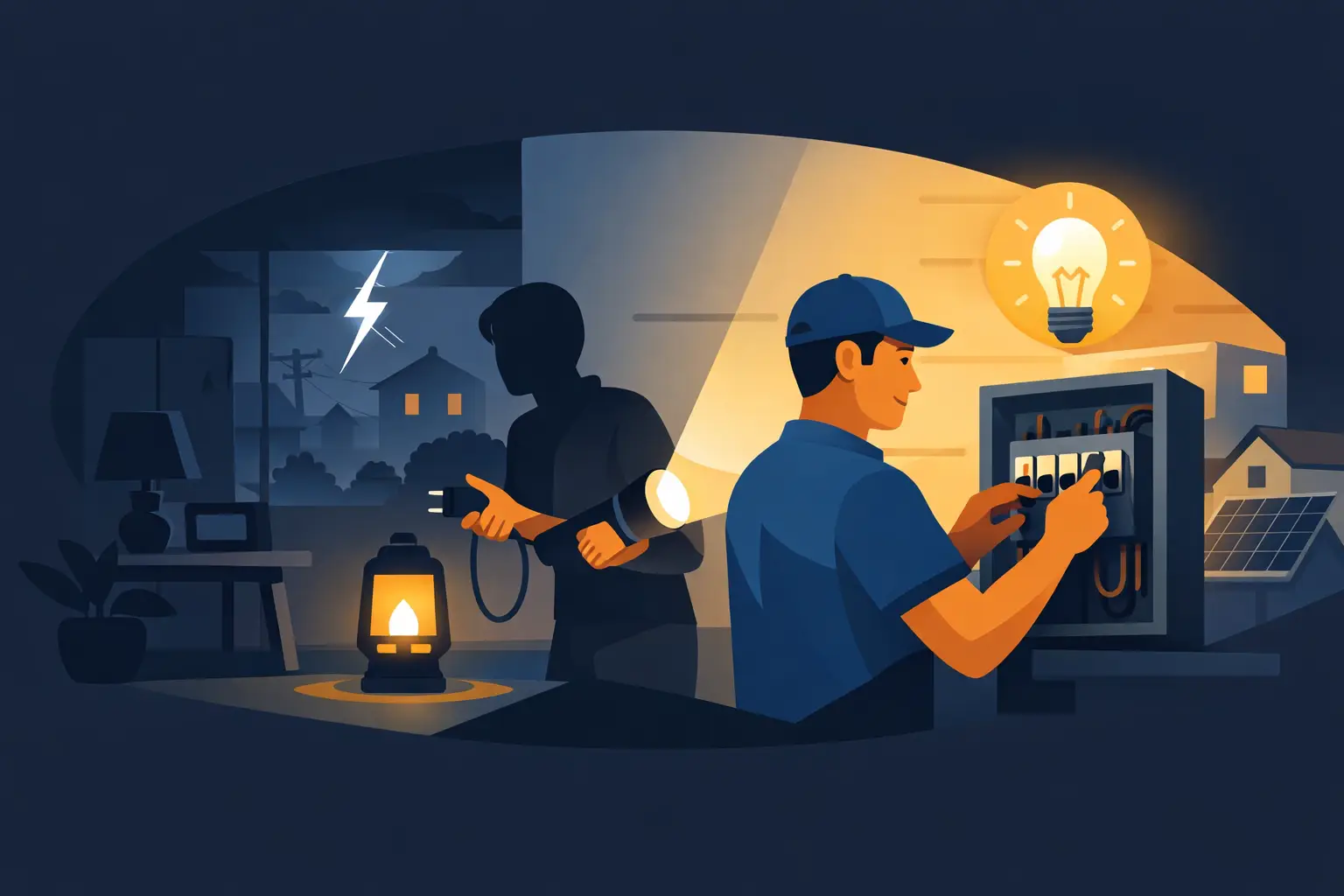
A refrigerator goes silent, lights stop working in one room, or an entire building loses power without warning. When that happens, the priority is not just figuring out how to fix power loss – it is avoiding a shock hazard, electrical fire, spoiled food, or costly damage to equipment.
Some outages have a simple, safe explanation, such as a tripped breaker or a utility interruption. Others point to damaged wiring, a failed electrical panel component, water intrusion, or an overloaded circuit. Knowing the difference helps homeowners and business owners make the right call quickly.
Start by Determining How Much Power Is Lost
Before touching a breaker panel, identify the scope of the problem. Are all lights, outlets, and appliances off? Is the issue limited to one room, one appliance, or a few outlets? A partial outage and a whole-property outage have different likely causes.
If the entire home or business is without power, look outside. Check whether nearby homes, streetlights, or neighboring businesses are also dark. A widespread outage is usually a utility issue, especially after a storm, vehicle accident, or severe wind event. Report it to the power company and avoid damaged lines, fallen branches near wires, or outdoor electrical equipment.
If neighboring properties have power but yours does not, the problem may be at your main breaker, meter equipment, service connection, or electrical panel. Do not remove a meter cover or attempt repairs around the service entrance. Those areas can remain energized even when the lights inside are off.
A partial loss of power needs a closer look. For example, a bedroom may lose power while the rest of the house works, or several outlets on one wall may stop working at once. That usually means a branch circuit has tripped, a GFCI outlet has opened, a connection has failed, or a circuit is overloaded.
How to Fix Power Loss Caused by a Tripped Breaker
A breaker is designed to shut off when it detects an overload, short circuit, or ground fault. It is a safety device, not an inconvenience to force back on repeatedly.
First, unplug or turn off the devices that were operating when the power went out. High-demand items such as space heaters, hair dryers, microwaves, portable air conditioners, and power tools can overload a circuit when used together. Then go to the electrical panel and look for a breaker that is in the middle position or visibly marked as tripped.
To reset it, move the breaker firmly all the way to the OFF position first, then switch it back to ON. If power returns and the breaker stays on, reconnect devices one at a time. This can help identify whether a particular appliance is the source of the problem.
If the breaker immediately trips again, leave it off. Repeated tripping can indicate a shorted appliance, damaged wiring, loose connections, moisture inside an outlet box, or a circuit that is undersized for the electrical load. Resetting it over and over can create heat and increase the risk of damage. A licensed electrician should diagnose the cause rather than simply restore power temporarily.
Check GFCI Outlets Before Assuming Wiring Has Failed
Many homes have GFCI protection in bathrooms, kitchens, garages, laundry areas, crawlspaces, exterior locations, and other damp or wet areas. These outlets have TEST and RESET buttons and are designed to shut off power quickly if they sense a ground fault.
One GFCI can protect several outlets downstream. That means a dead outlet in a garage, bathroom, or on an exterior wall may be controlled by a GFCI somewhere else in the property. Check nearby GFCI outlets and press RESET after making sure the area is dry and no appliance is connected to a wet outlet.
If a GFCI will not reset, do not force it. Unplug connected devices and try once more. If it still will not reset, there may be a fault on the circuit, moisture in a box, a failed GFCI device, or a panel issue. This is especially common after heavy rain or flooding, when outdoor receptacles and damaged weatherproof covers can allow water into electrical components.
Watch for Warning Signs That Require Immediate Help
Power loss is not always an emergency, but certain signs should be treated seriously. Turn off power at the main breaker only if it is safe to reach and you can do so without standing in water. Then arrange prompt professional service.
Call a licensed electrician right away if you notice:
- A burning smell, smoke, sparks, or a warm electrical panel
- Buzzing, crackling, or popping sounds from outlets, switches, or breakers
- Flickering lights throughout the building or lights that get unusually bright and dim
- Discoloration around outlets, a melted plug, or a breaker that will not stay on
- Water near electrical equipment, storm damage, or a damaged service line
These symptoms can be associated with loose connections, overheated conductors, panel failure, water damage, or service equipment problems. In some cases, partial power loss can be caused by a failing neutral connection. This can create unstable voltage that damages electronics and appliances. Shut off sensitive equipment and seek qualified help rather than waiting to see if the issue clears on its own.
Why One Room May Have No Power
When only one room loses power, the cause is often local to that circuit. A tripped breaker or GFCI is the most common and easiest possibility to check. If those devices are normal, the problem could be a loose outlet connection, failed switch, damaged wire, or a backstabbed receptacle connection that has overheated over time.
Older homes can be more prone to these issues, particularly when outlets have been added during past renovations or when electrical demand has increased beyond what the original wiring was designed to support. A room that now runs multiple computers, chargers, televisions, window units, and gaming equipment may be putting far more strain on a circuit than it did years ago.
Do not remove outlet covers or pull receptacles out of the wall unless you are qualified to work on electrical systems. A dead outlet may still have energized wires in the box, and the actual fault may be upstream from where the power stopped.
Power Loss in Commercial Buildings Needs a Faster Assessment
For a small business, partial power loss can interrupt point-of-sale systems, refrigeration, lighting, internet service, security equipment, and customer operations. The right response depends on what is affected. A single overloaded receptacle circuit may be a contained issue, while flickering lights across multiple areas can signal a more serious panel or service problem.
Avoid plugging critical equipment into extension cords as a long-term workaround. Extension cords are not a substitute for properly installed dedicated circuits, and overloaded temporary wiring can create another hazard. If refrigeration, life-safety equipment, security systems, or essential operations are affected, professional electrical troubleshooting should be a priority.
Prevent the Next Electrical Outage
Not every power failure can be prevented, especially when storms affect utility service. But routine maintenance and timely upgrades reduce the chance of an internal electrical failure.
Have an electrician inspect an aging panel, particularly if breakers trip often, the panel feels warm, corrosion is visible, or the building has added major loads such as an EV charger, HVAC equipment, new kitchen appliances, or additional office equipment. A panel upgrade may be appropriate when the existing service cannot safely support current demand.
It also helps to use high-demand appliances on separate circuits when possible, replace damaged cords and loose outlets, keep exterior receptacle covers in good condition, and schedule electrical work properly during remodeling. Repairs that are code-compliant from the start are usually less expensive than correcting unsafe work later.
For homeowners and businesses in Savannah and nearby communities, salt air, humidity, thunderstorms, and older building infrastructure can add to electrical wear. A licensed electrician can identify the real cause of power loss, make safe repairs, and recommend practical improvements without guessing or taking unnecessary risks.
When the power goes out, start with the safe checks, trust the warning signs, and leave panel, wiring, and service repairs to a qualified professional. Fast, careful troubleshooting protects the property and the people inside it.
Leave a Reply