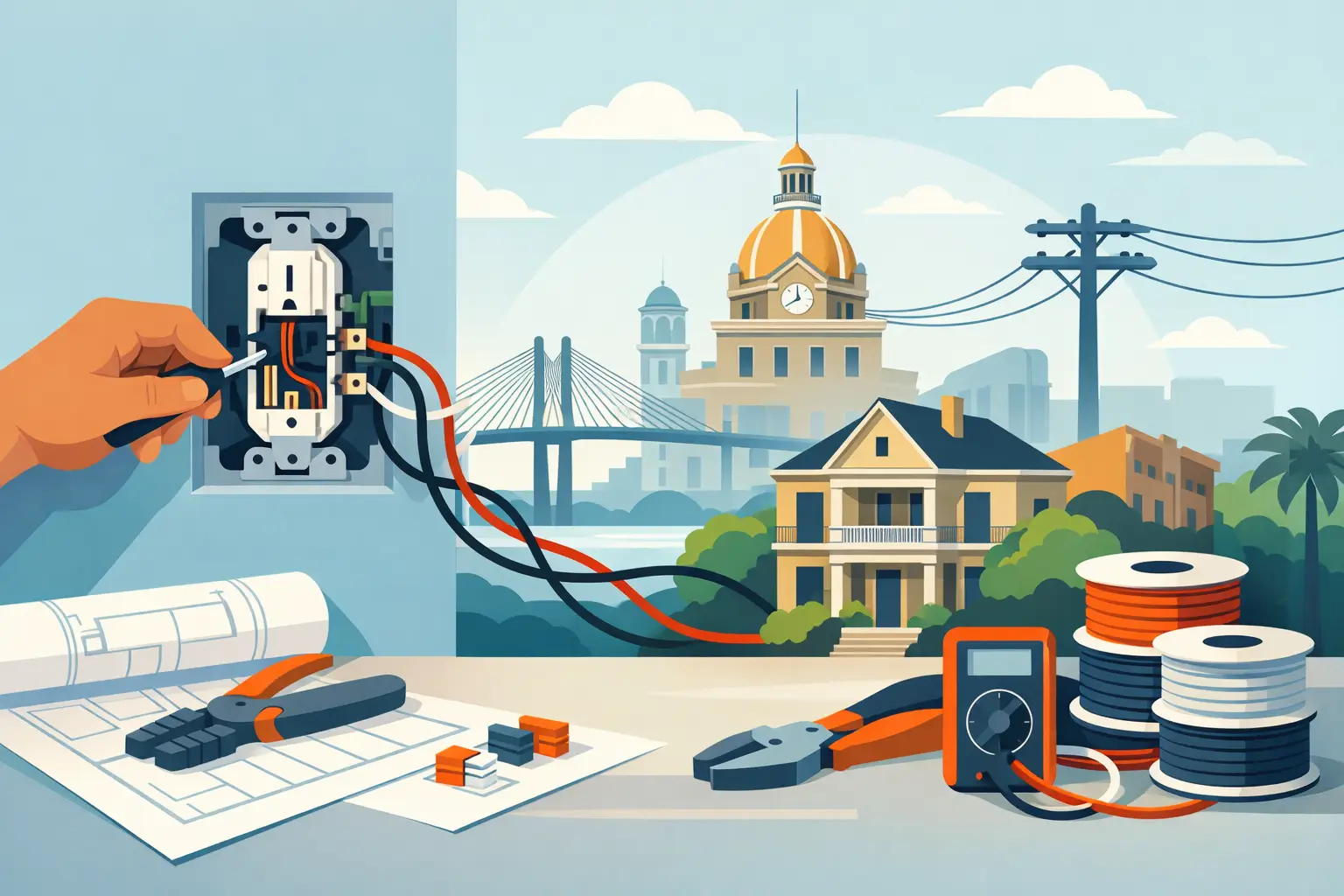
A breaker that trips every time the microwave and coffee maker run is not just an inconvenience. It can be a warning that a circuit no longer fits the way your property is used. This code compliant wiring upgrade guide explains how Savannah-area homeowners and business owners can identify real electrical upgrade needs, plan work responsibly, and avoid shortcuts that create safety or inspection problems.
Electrical codes are designed to reduce shock, fire, and equipment hazards. They are not a suggestion, and they are not always satisfied by replacing one outlet or adding a larger breaker. A licensed electrician looks at the entire system – the service, panel capacity, conductor size, grounding, circuit load, devices, and the specific requirements that apply to the property.
Start With the Reason for the Upgrade
A good upgrade begins with the problem you are trying to solve. Older homes may have too few outlets, ungrounded receptacles, aging panels, or circuits that were never intended to support modern appliances. Commercial spaces often need new dedicated circuits for equipment, lighting changes, tenant improvements, or expanded work areas.
Some warning signs call for prompt professional attention: recurring breaker trips, flickering lights, warm outlets or switch plates, burning odors, buzzing from a panel, damaged wiring, and outlets that do not hold plugs securely. If you smell burning, see smoke, or have a panel that is hot to the touch, turn off power if it is safe to do so and call for emergency electrical service. Do not continue resetting a breaker to keep equipment running.
Not every upgrade is driven by a failure. A kitchen remodel, home office, EV charger, workshop, HVAC replacement, pool equipment installation, or business expansion can change electrical demand significantly. Planning the wiring at the same time as the project is usually less disruptive and more affordable than opening walls later.
What Code-Compliant Wiring Actually Means
Code compliance is more than using new wire. The applicable electrical code, local permitting requirements, and the authority having jurisdiction determine what is required for a specific job. Requirements can differ based on the building type, its age, the scope of renovation, and whether the work is residential or commercial.
A code-compliant installation generally means the electrical system has properly sized conductors and breakers, suitable grounding and bonding, approved boxes and fittings, protected wiring methods, and required safety devices. It also means connections are accessible where required, equipment is correctly labeled, and the work is performed under the appropriate permit and inspection process when required.
For example, installing a 20-amp breaker on an existing 15-amp circuit does not solve overloads. It can allow too much current through wiring that was not designed for it. The correct solution may be a new dedicated circuit, a load adjustment, or an evaluation of the panel and service capacity.
Safety Devices Matter
Modern wiring upgrades often include ground-fault circuit interrupter, or GFCI, protection in areas exposed to moisture, such as bathrooms, kitchens, garages, exterior locations, and certain commercial spaces. Arc-fault circuit interrupter, or AFCI, protection may also be required in many living areas to help detect dangerous arcing conditions.
These devices can occasionally trip because of a failing appliance, a damaged cord, moisture, or a wiring issue. Replacing a protective breaker with a standard breaker simply to stop tripping is not a safe fix. A licensed electrician should identify why it is tripping before making changes.
Evaluate the Panel and Service Before Adding Circuits
The panel is the control center of your electrical system, but a larger panel alone does not automatically provide more usable power. The service feeding it must have enough capacity, and the existing load must be calculated properly.
A professional evaluation considers major fixed loads such as HVAC equipment, water heaters, ranges, dryers, pumps, and business machinery, along with planned additions. An EV charger or a new heat pump can be a substantial load. Depending on the results, you may need only a new circuit, a panel upgrade, a service upgrade, or load-management options that fit the property and budget.
Older panels deserve special attention. Corrosion, double-tapped breakers, missing knockouts, improper labeling, outdated equipment, and overcrowded wiring can all point to a system that needs correction. In coastal Georgia, humidity and salt air can also accelerate corrosion in exterior equipment. A careful inspection helps determine whether repairs are enough or replacement is the wiser long-term investment.
A Practical Code Compliant Wiring Upgrade Guide
The safest path is straightforward: define the project, have the system assessed, obtain required approvals, and let qualified professionals perform and verify the work. Trying to skip steps may save money at first, but it can lead to failed inspections, repair costs, insurance concerns, or serious hazards.
1. Document the Existing Problems and Future Plans
Make note of when breakers trip, which rooms lose power, and what equipment is operating at the time. For a renovation, share appliance specifications, floor plans, lighting ideas, and future needs such as an EV charger or generator connection. Clear information helps the electrician design circuits that serve the space without unnecessary work.
For business properties, include equipment schedules, operating hours, and any needs for emergency lighting, signage, data equipment, or customer-facing areas. A wiring plan must support both daily operations and safety requirements.
2. Get a Licensed Electrical Assessment
A licensed electrician can inspect the panel, test circuits, evaluate grounding, identify damaged or obsolete components, and calculate anticipated loads. This assessment should distinguish between an urgent hazard and an improvement that can be scheduled as part of a larger project.
Ask for a clear explanation of the proposed work. You should understand whether the estimate covers permits, new circuits, panel work, patching considerations, device upgrades, inspections, and any conditions that could change the price after walls are opened. Honest communication protects your budget and prevents surprises.
3. Permit the Work When Required
Permits are not paperwork for paperwork’s sake. They create a record of the work and allow an inspection to confirm key safety details that may be hidden after drywall is closed. Permit requirements vary by project and jurisdiction, so do not rely on advice from a neighbor or an online video.
For work in Savannah and nearby communities, a local electrical professional can help determine the proper process for the job location. This is particularly valuable for service upgrades, panel replacements, additions, remodels, and commercial alterations where several trades may be involved.
4. Use the Right Wiring Method for the Location
Wire type, protection, and installation method depend on where the circuit runs. Wiring in walls, attics, crawl spaces, outdoors, underground, wet locations, and commercial areas may need different materials and protection. A cable that is acceptable in a dry interior wall may not be appropriate in a damp or exposed location.
Placement matters too. Boxes must be sized for the conductors and devices inside them. Cables need proper support and protection from physical damage. Outdoor receptacles and equipment need weather-rated components. These details may not be visible after a project is finished, but they are central to reliable, code-compliant workmanship.
5. Test, Label, and Maintain the Finished System
After installation, circuits should be tested and the panel should be labeled clearly enough for someone to identify what each breaker controls. “Lights” is not useful labeling in a busy home or commercial space. Specific labels make emergency shutoffs, troubleshooting, and future work safer.
Keep access to the panel clear. Test GFCI and AFCI devices according to the manufacturer’s instructions, address corrosion or moisture promptly, and schedule electrical maintenance for commercial properties with significant equipment or heavy use. Small issues are easier to correct before they become outages.
When a Partial Upgrade Makes Sense
A complete rewire is not always necessary. In some homes, adding grounded outlets where feasible, replacing unsafe devices, correcting panel defects, and installing dedicated circuits for high-demand appliances can provide meaningful improvements. In other buildings, extensive aging wiring or major remodeling makes a broader rewire more practical while walls and ceilings are already open.
The right scope depends on the condition of the existing system, the future use of the property, and your budget. The goal is not to sell more work than you need. It is to make sure the work you do choose is safe, properly planned, and built to last.
If your property has persistent electrical issues or you are planning a renovation, treat the wiring as part of the foundation of the project. A licensed local electrician can help you make a sound decision before a small electrical limitation becomes an expensive disruption.
Leave a Reply