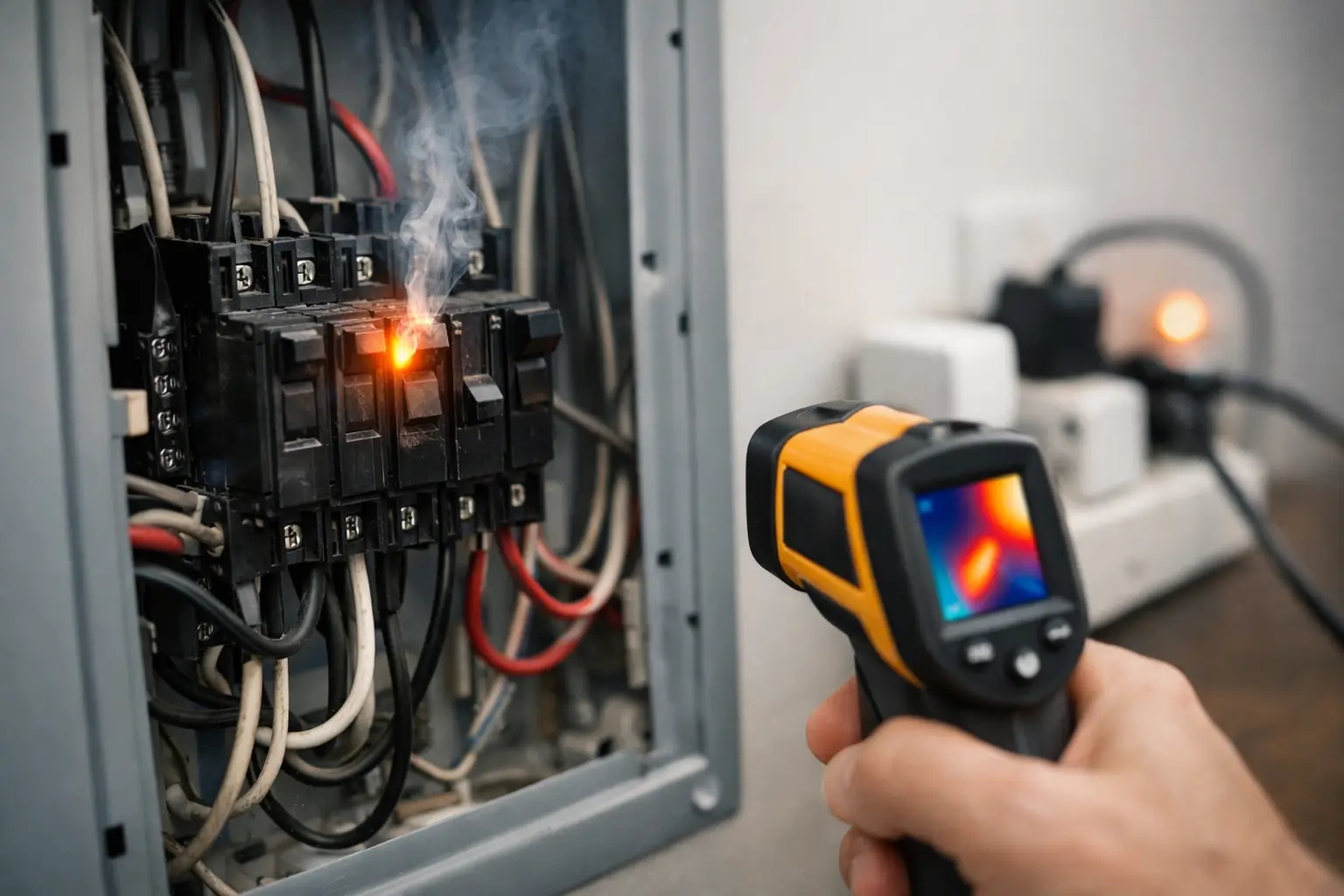
A breaker that trips once after a storm is not always a crisis. A breaker that trips every time the microwave, space heater, or office equipment turns on is sending a clear message: that circuit may be carrying more electrical demand than it was designed to handle. Knowing how to spot overloaded circuits can help protect your Savannah home or business from inconvenient outages, damaged equipment, and avoidable fire risks.
An overloaded circuit happens when the combined electrical load exceeds the safe capacity of the wiring, breaker, or outlet circuit. Modern life makes this easy to do. One room may be powering televisions, gaming systems, chargers, lamps, portable heaters, window AC units, and more through a small number of outlets. In older homes and commercial spaces, the existing electrical system may not have been designed for that level of demand.
The most common signs of an overloaded circuit
The clearest warning sign is a circuit breaker that repeatedly trips. Breakers are safety devices. They shut power off when they detect too much current, helping prevent wiring from overheating. Resetting a breaker once can be reasonable after identifying and unplugging the appliance that caused the problem. Resetting it over and over without addressing the load is not a repair.
Flickering or dimming lights can also point to a problem, especially when it happens as a large appliance starts. For example, lights may dim when a refrigerator compressor, microwave, hair dryer, or power tool turns on. A brief and minor change may occur in some situations, but frequent flickering, pronounced dimming, or lights that brighten unexpectedly deserve professional attention. Those symptoms can also indicate a loose connection or another wiring issue.
Pay attention to warm outlets, switches, cords, and cover plates. Electrical components should not feel hot during normal use. A little warmth from a charger or electronic device can be normal, but heat at the wall outlet, switch, or breaker panel is a warning sign. Turn off and unplug what you can safely, avoid using that circuit, and arrange an inspection.
Other signs include buzzing or crackling sounds, a burning or fishy odor near an outlet or panel, discoloration around outlets, and plugs that fit loosely. These are not issues to watch for a few more days. If you notice smoke, sparks, a strong burning smell, or a hot electrical panel, shut off power only if you can do so safely and call for emergency electrical help right away.
How to spot overloaded circuits room by room
Start by looking at where high-wattage appliances are being used. Kitchens, bathrooms, laundry areas, garages, workshops, and break rooms tend to carry the heaviest loads. Portable space heaters, air fryers, toaster ovens, coffee makers, hair dryers, irons, vacuum cleaners, and portable air conditioners can use significant power on their own.
In a kitchen, trouble often starts when several countertop appliances run at once. A coffee maker, toaster oven, and microwave may be plugged into outlets that share a circuit, even if they are on opposite sides of the room. In a garage or workshop, a refrigerator, freezer, power tools, battery chargers, and outdoor equipment can create the same problem.
Bedrooms and living rooms can be misleading because individual electronics may not use much power. The issue is often the number of devices connected through one power strip or extension cord. A television setup, gaming console, sound system, internet equipment, lamps, and multiple chargers can add up. If a power strip is being used as a permanent substitute for needed wall outlets, the circuit and outlet layout should be evaluated.
For small businesses, look beyond the obvious equipment. A single office circuit may be powering computers, monitors, printers, phone systems, networking equipment, and portable heaters. In retail, restaurant, and service spaces, overloaded circuits may develop when equipment is added over time without an electrical upgrade. Repeated outages can disrupt operations, but they can also create safety and code concerns.
A simple way to identify the load
You do not need to calculate every watt to recognize a pattern. First, note which breaker trips and what was operating at the time. Then unplug or turn off several items on that circuit before resetting the breaker. Add devices back one at a time, allowing each to run normally. If the breaker trips when certain combinations are used together, the circuit may be overloaded.
Do not remove the panel cover, replace a breaker with a larger one, or attempt to alter wiring to stop the tripping. A larger breaker is not automatically a solution. If the wire is not rated for that breaker size, it can overheat before the breaker responds. The correct fix depends on the wiring size, circuit design, panel capacity, appliance requirements, and local code.
A circuit map can make this process easier. Label breakers with the rooms, outlets, and equipment they serve. Many panels are labeled vaguely or incorrectly, particularly in older properties or after remodeling. A licensed electrician can trace circuits accurately and update panel labels so homeowners, managers, and maintenance teams know what each breaker controls.
Overload or electrical fault? The difference matters
An overload is not the only reason a breaker trips. A damaged appliance, failing outlet, loose wire, short circuit, ground fault, or moisture intrusion can trip a breaker as well. That is why the same symptoms should not be dismissed as simply using too many devices.
If a breaker trips immediately after being reset, even with appliances unplugged, stop resetting it. If one specific appliance trips the breaker wherever it is plugged in, that appliance may be faulty. If a bathroom, kitchen, exterior, garage, or laundry outlet will not reset, a ground-fault protection device may have detected a potentially dangerous condition. These situations call for qualified troubleshooting rather than guesswork.
Older wiring and aging panels add another layer of concern. Some Savannah homes have electrical systems that have been modified over decades to meet changing needs. An added room, renovated kitchen, workshop, EV charger, or new HVAC equipment can place demands on a panel that was never sized for them. A professional load calculation and panel inspection can show whether a dedicated circuit, new outlet, service upgrade, or panel upgrade is the safer long-term answer.
What you can safely do right now
Reduce the load on the affected circuit by unplugging nonessential devices and moving only low-demand items to a different outlet on a separate circuit. Avoid using extension cords as a permanent solution, and never connect multiple power strips or extension cords together. Use power strips with built-in overload protection for electronics, but remember that they do not increase the capacity of the wall circuit.
Keep high-wattage appliances on their own properly installed circuits whenever possible. Portable heaters should plug directly into a wall outlet, not a power strip or extension cord. The same is generally true for appliances that produce heat, such as microwaves, toaster ovens, and hair dryers. If your home or workplace does not have enough outlets for safe daily use, adding properly wired outlets is far safer than relying on adapters.
When to call a licensed electrician
Call a licensed electrician when breakers trip repeatedly, outlets feel warm, lights flicker regularly, or you cannot identify why a circuit is shutting off. For a property manager or business owner, it is also wise to schedule service when tenant equipment, seasonal loads, or new machinery is being added. Addressing capacity before the busy season is usually more affordable and less disruptive than responding after an outage.
Emergency service is appropriate for burning odors, smoke, sparks, buzzing from the panel, a hot breaker, or power loss affecting essential equipment. Keep people away from the affected area and do not touch damaged outlets, exposed wires, or a wet electrical panel.
A qualified inspection can identify whether the answer is as simple as redistributing appliances or as involved as installing a dedicated circuit, repairing damaged wiring, or upgrading a panel. The goal is not just to get the breaker back on. It is to make sure your electrical system can support the way you actually live or operate.
If an electrical problem keeps interrupting your day, treat the breaker as a safety warning rather than an inconvenience. A timely inspection gives you a clear answer, a code-compliant repair plan, and the confidence to use your home or business safely.
Leave a Reply